


 Cart
Cart
 sales@molnova.com



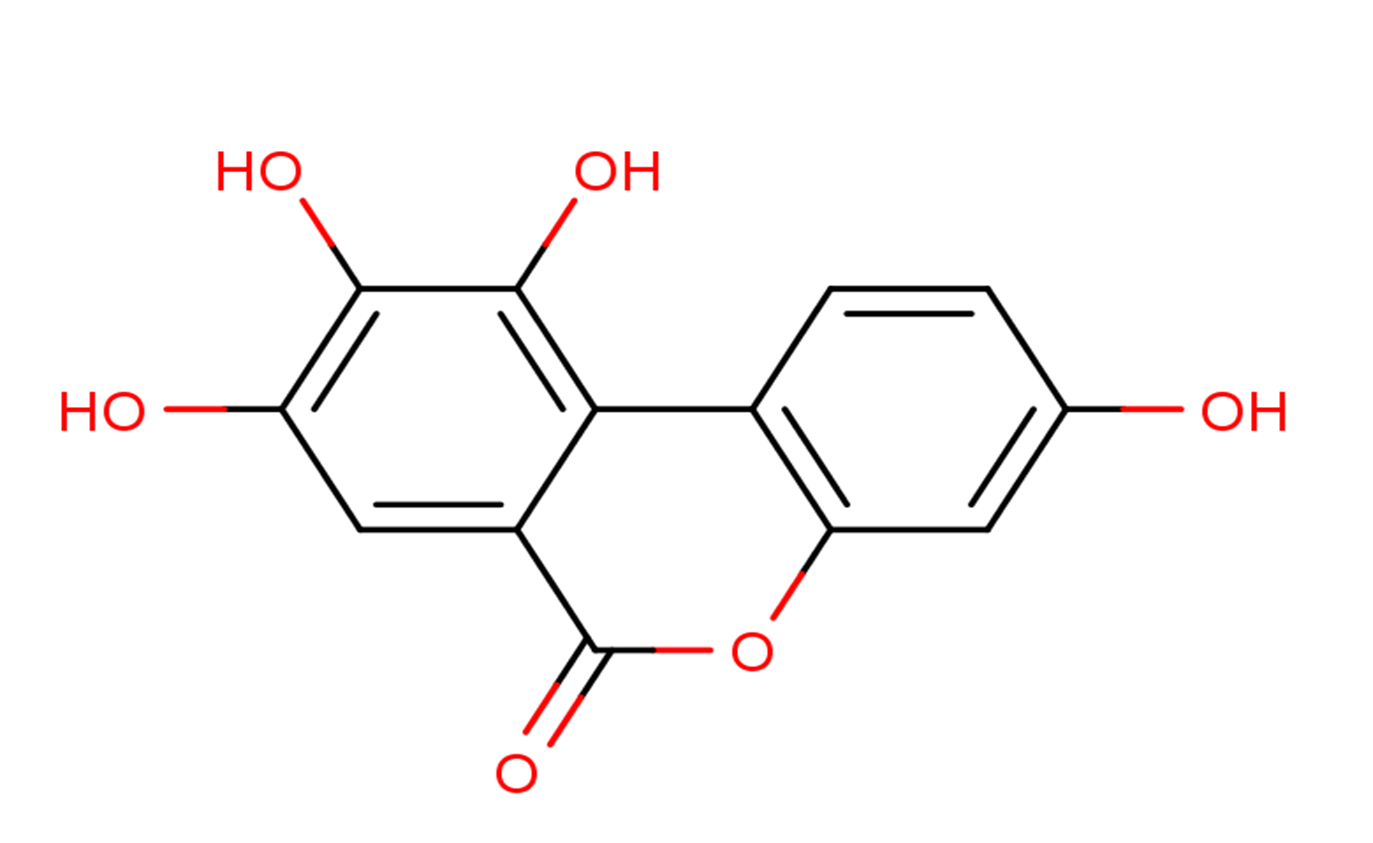
urolithin M6
CAS No. 1006683-97-1
urolithin M6( 3,8,9,10-tetrahydroxy urolithin )
Catalog No. M23211 CAS No. 1006683-97-1
urolithin M6 (UM6) is an ellagitannin metabolite produced by gut microbiota, was identified as a putative galloflavin mimetic
Purity : >98% (HPLC)
 COA
Datasheet
HNMR
HPLC
MSDS
Handing Instructions
COA
Datasheet
HNMR
HPLC
MSDS
Handing Instructions
| Size | Price / USD | Stock | Quantity |
| 5MG | 184 | In Stock |


|
| 10MG | 262 | In Stock |
|
| 100MG | Get Quote | In Stock |
|
| 200MG | Get Quote | In Stock |
|
| 500MG | Get Quote | In Stock |
|
| 1G | Get Quote | In Stock |
|
Biological Information
-
Product Nameurolithin M6
-
NoteResearch use only, not for human use.
-
Brief Descriptionurolithin M6 (UM6) is an ellagitannin metabolite produced by gut microbiota, was identified as a putative galloflavin mimetic
-
Descriptionurolithin M6 (UM6) is an ellagitannin metabolite produced by gut microbiota, was identified as a putative galloflavin mimetic
-
In Vitro——
-
In Vivo——
-
Synonyms3,8,9,10-tetrahydroxy urolithin
-
PathwayOthers
-
TargetOther Targets
-
RecptorOthers
-
Research Area——
-
Indication——
Chemical Information
-
CAS Number1006683-97-1
-
Formula Weight260.2
-
Molecular FormulaC13H8O6
-
Purity>98% (HPLC)
-
Solubility——
-
SMILESC1=CC2=C(C=C1O)OC(=O)C3=CC(=C(C(=C23)O)O)O
-
Chemical Name——
Shipping & Storage Information
-
Storage(-20℃)
-
ShippingWith Ice Pack
-
Stability≥ 2 years
Reference
1.García-Villalba R, Selma MV, Espín JC, Tomás-Barberán FA. Identification of Novel Urolit Metabolites in Human Feces and Urine after the Intake of a Pomegranate Extract [published correction appears in J Agric Food Chem. 2020 Mar 11;68(10):3297]. J Agric Food Chem. 2019;67(40):11099-11107. doi:10.1021/acs.jafc.9b04435
molnova catalog



related products
-
AG-270
AG-270 is an allosteric and orally active inhibitor of MAT2A.
-
2-{[2-(2,6-dioxopipe...
trifluoroacetic acid is a chemical compound.
-
Monomethyl lithosper...
Monomethyl lithospermate has potential antiviral activity, alleviating ischemic stroke injury in vivo in middle cerebral artery occlusion mice by activating PI5K/Akt signaling and protecting oxygen-glucose deprivation/reoxygenation-induced SHSY-3Y cells in vitro.
